Here are some resources I've found to be helpful in my walk.
Listening to Praise and Worship Music helps me whether my day is going good, or bad! I find it uplifting anytime.
Music Around the House:
Music in the car:


Listening to Praise and Worship music helps me keep my focus on God throughout the day. Whether I’m in the kitchen or the living room, I love using the Amazon Echo Dot to fill my home with music.
It’s incredibly handy because you can just ask it to play your favorite worship station, and the best part is you don't even need a paid subscription or a Prime membership to get started. It’s a simple, hands-free way to keep a 'song in your heart' while you go about your day!
Making it Personal with Playlists
While the Echo Dot is great for general stations, having an Amazon Prime membership really opens up the ability to customize your environment. You aren't limited to just what the "radio" plays; you can curate your own atmosphere.
I’ve found that creating a dedicated Worship Playlist is the best way to ensure the right songs are playing at the right time. Whether it’s high-energy praise for a productive morning or quiet, reflective hymns for evening prayer, you can build a collection that speaks directly to your heart.
How I use it: Once your playlist is set up in your Amazon Music app, you don’t even have to touch your phone. You can simply say:
"Alexa, play my Worship playlist."
It’s a seamless way to transition from the noise of the world into a space of worship. By using your own curated list, you’re not just listening to music—you’re setting an intentional tone for your home.
If there's one thing that could make me "lose my religion," it's dealing with idiot drivers! I'm very glad the church doesn't ride in my back seat


when someone cuts me off. I'd have lots of 'splaining' to do! To keep my cool and my heart in the right place, I rely on SiriusXM. Yes, it’s a paid service, but for me, it is so worth it. Having uninterrupted, commercial-free worship music makes a world of difference in my attitude. It turns my car from a place of frustration into a sanctuary on wheels. If you heard what I was listening to instead of what I was thinking during those traffic jams—well, let’s just say it’s a much better way to travel!
My Favorite Channels:
The Message (Channel 78): Great for contemporary Christian hits that keep your spirits high.
Message Worship (Channel 79) Worshipful Music that can raise your spirit.
And many others - they add new ones all the time.
The "list price" for the service is over $25 per month, but guess what - I never pay that. In order to cancel, you have to use their website and chat. When you tell them you're going to cancel, they sharpen the pencil and offer great deals. I don't pay more than $7.00 a month! No ads, just great music. It's so worth it. While I haven't taken advantage of it, you can add it to your Alexa to play in the home, too. No extra charge - it's called their "streaming service." I believe you can use Apple CarPlay or Android Auto to play music in your car through your smart phone, but I don't have any experience with that. Try it. You may be surprised at the difference it can make in your day.
My Alexa Worship Playlist:
Hold us Together by Matt Maher Trust in You by Lauren Daigle In Christ Alone by Adrienne Liesching
Flawless by MercyMe Glorious Day by Casting Crowns
So Long Self by MercyMe Wonderful Merciful Savior by Selah
Holy Water by We the Kingdom Worn by 10th Ave North
The Blessing by Kari Jobe
Child of Love by We the Kingdom
Thank God I Do by Lauren Daigle
Oh Death by MercyMe
From Silent Screens to "The Chosen": My Journey with Jesus on Film
For as long as I can remember, the story of Jesus has been told through the lens of a camera, and I feel like I’ve had a front-row seat for much of that history.
Looking back, my appreciation for these stories started at a very young age. I still remember the magic of watching "The King of Kings". It was a silent film, and because I was too young to read the title cards, my sister would sit beside me and softly read the words aloud so I could follow along.
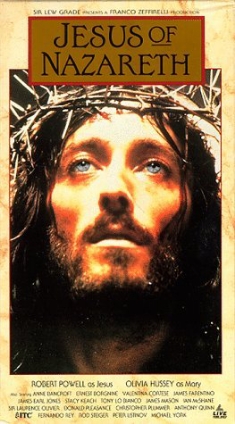
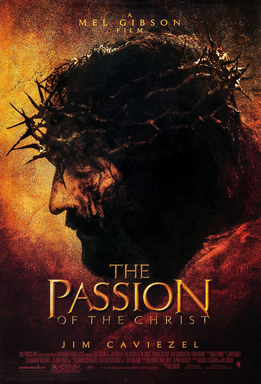
As the years passed, the scale of these stories grew. I remember the impact of "The Greatest Story Ever Told" in the 60s—that epic, cinematic feel that brought the Gospels to life for a new generation. In the 80's, my church group watched "Jesus of Nazareth' together. I have several DVD's - The Gospel of Mark and The Gospel of John, which combine cinema with a word for word presentation of those Gospels. And who can forget Mel Gibson's The Passion of the Christ - it's hard to watch but shows the agony Christ endured for us all.
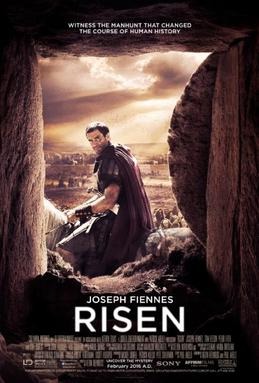
There are many films that were based on events during the time of Christ - Ben Hur comes to mind. Recently, a film called Risen was released about a Roman soldier trying to prove the Resurrection was a lie. With so much filth coming out of Hollywood, these films deserve our patronage.
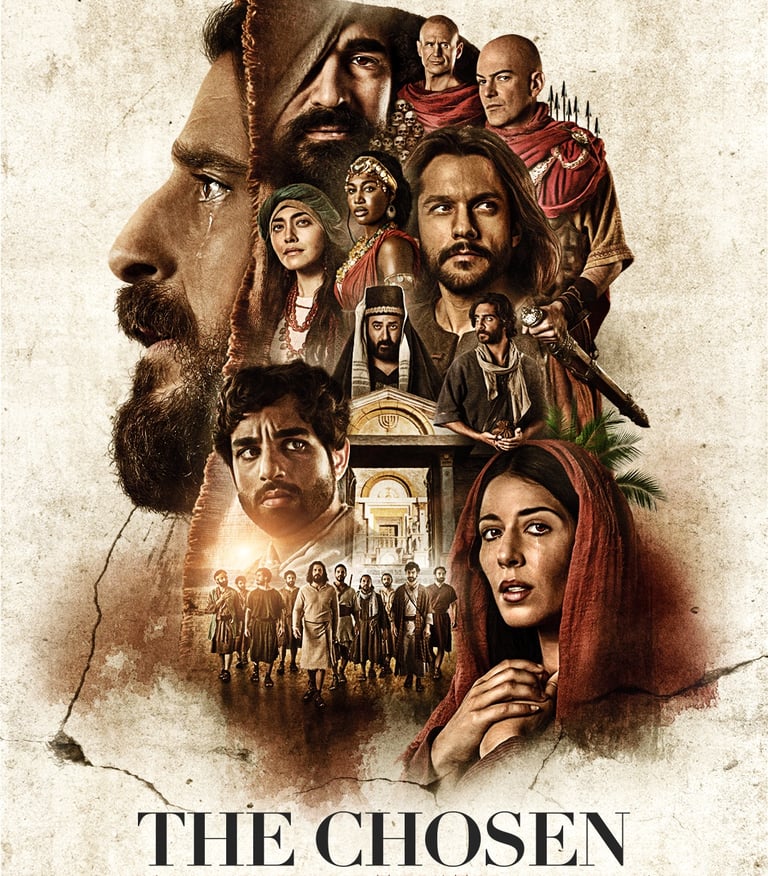
But today, we have something truly special. I have found "The Chosen" to be the most moving and personal portrayal of the life of Christ and His disciples that I have ever seen. It doesn't just show the miracles; it shows the humanity, the humor, and the heart of the people who followed Him.
Why "The Chosen" is the Most Relatable Depiction of Jesus I’ve Ever Seen
For many of us, the stories of the Gospels can sometimes feel like ancient portraits—beautiful, but distant. However, The Chosen has changed that. While it is an "extra-biblical" drama (meaning it adds backstory and dialogue not found in scripture), it does so in a way that feels incredibly "real" and grounded in the actual world Jesus inhabited. Here is why this show has captured my heart and why I think it’s essential viewing:
1. A Deeply Jewish Jesus
Too often, film adaptations forget that Jesus didn't live in a vacuum. The Chosen leans into His identity as a Jew. We see Him celebrating Hanukkah and the Feast of Booths, reciting traditional Jewish prayers, and teaching with authority in the Synagogue. It anchors the story in a specific culture, making the fulfillment of prophecy feel that much more significant. I've learned a lot about Jewish culture.
2. The "Real-Life" Struggle of Faith
One of the most refreshing aspects of the show is its honesty about the Christian walk. It doesn't shy away from the hard truths:
The Reality of Suffering: It shows the dynamic of "I follow Jesus, yet bad things still happen to me." Faith doesn't immediately erase earthly pain.
The Cycle of Grace: We see characters who have been redeemed fall back into sin, only to find that Jesus is ready to forgive them again.
A Slow Transformation: The disciples aren't perfect saints from day one; they are often slow to understand Jesus’ mission, proving that growth is a process, not an event.
3. Human Tensions and Forgiveness
The show masterfully portrays the friction between the disciples. They come from radically different backgrounds—tax collectors, fishermen, zealots—and their personalities often clash. The Chosen shows that forgiveness takes time and effort, even when you're following the Messiah.
4. Complex Antagonists and Allies
The world of first-century Israel is painted in shades of gray rather than just black and white:
The Religious Leaders: We see how many were driven by political survival rather than spiritual hunger, and how that shaped their opposition to Jesus.
The Offense of the Gospel: The show explores why people were offended by Jesus—He didn't always fit the "Messiah" mold they expected.
The Romans: Rather than being mindless villains, we see the two sides of Rome—some soldiers are cruel and oppressive, while others are surprisingly open to Jesus’ ministry.
5. The Wonder of the Miraculous
Finally, I love how the show handles the supernatural. When Jesus gives the disciples the power to heal, their genuine surprise is palpable. You feel the weight of that power and the profound effect it has on the people around them.
The Chosen doesn't just tell us what Jesus did; it invites us to imagine what it was like to walk in the dust behind Him. It reminds us that the people He called were just as messy, confused, and hopeful as we are today.
How You Can Watch
If you haven't seen it yet, I can't recommend it enough. It is entirely free to watch, and there are a few easy ways to get started:
Download the App: Search for "The Chosen" on your smartphone, tablet, or Smart TV (Roku, Apple TV, Fire Stick).
Watch Online: You can stream every episode directly at TheChosen.tv.
Closed Captions: Just like my sister reading to me years ago, the app has wonderful closed captioning and translations for anyone who needs a little extra help following the dialogue.
I truly believe this series will bless your walk as much as it has mine. As they say in the show: "Come and see."
The Shroud of Turin
From Skeptic to Stunned: The Mystery of the Shroud
I’ll be honest: I used to lump the Shroud of Turin in with the people who see the Virgin Mary in a water stain or the face of Jesus on a piece of burnt sourdough. To me, it was just another case of pareidolia—the human brain’s desperate need to find patterns in the noise.
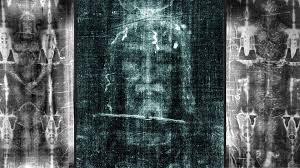
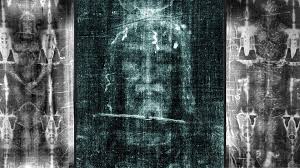
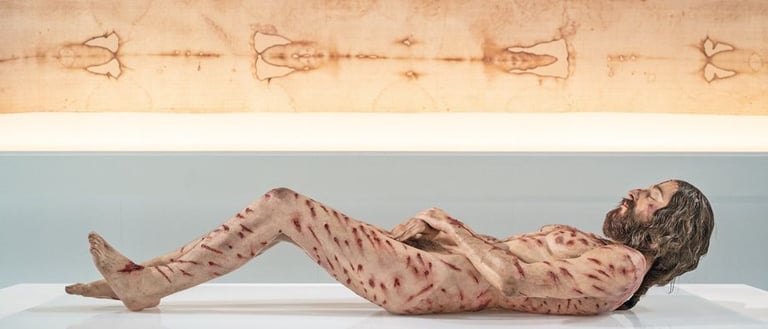
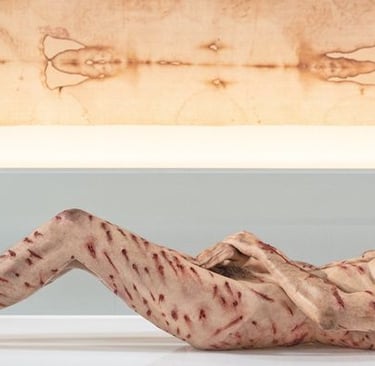
The Shroud of Turin is a 14.5-foot linen cloth housed in Turin, Italy, featuring a faint, photographic-negative image of a man showing wounds consistent with crucifixion. Venerated as Jesus’s burial cloth, it remains one of history's most debated artifacts, with scientific studies split between medieval forgery and unexplained origin.
In 1898, photographer Secondo Pia took the first official photos of the cloth. When he looked at his plates in the darkroom, he didn't see a standard "negative" of a painting. He saw a photographic-negative image that acted like a positive. In other words, the image on the cloth itself is technically a negative—something no medieval artist would (or could) have conceived, let alone executed. Negative imagery wasn't even a concept until the 19th century.
Beyond Paint and Pigment: The STURP Project
My "forgery" theory hit another wall when I looked into the 1978 STURP (Shroud of Turin Research Project). A team of world-class scientists spent 120 hours directly examining the cloth. Their conclusion? The image isn't made of paint, dye, or pigment. There are no brushstrokes. There is no "style." The coloring is confined to the topmost microscopic layer of the linen fibers, and bizarrely, it contains 3D topographic information that a flat painting simply cannot hold.
The Carbon Dating Question
"But what about the 1988 carbon dating?" I asked. That was the "gotcha" moment that supposedly proved the Shroud was a medieval fake from the 1300s. However, recent forensic and chemical analyses have thrown that into serious doubt. Critics and researchers now point out that the samples used were taken from a corner that had been repaired and rewoven in the Middle Ages, contaminated by centuries of handling and fire damage.
Newer techniques, like Wide Angle X-ray Scattering (WAXS), have actually pointed back to a 2,000-year-old origin, aligning perfectly with the era of the historical Jesus.
Dr. Gary Habermas, a prominent New Testament scholar and resurrection expert, considers the Shroud of Turin to have a "decent chance of being authentic". He emphasizes that its markings are remarkably consistent with the Gospels' descriptions of Jesus' crucifixion, including injuries from a Roman flagrum and a 3D-like image. He points to evidence such as over 200 points of similarity between the shroud image and 1st-century Roman coins, as well as pollen and blood analysis, which he suggests support its authenticity. Some researchers, such as John Jackson and Paolo Di Lazzaro, propose an intense burst of vacuum ultraviolet (UV) radiation released from the body caused the image. A Nuclear Explosion!!
The Shroud - The burial cloth of Jesus of Nazareth! The more you try to debunk it, the more the science pushes back. It’s no longer just a "pious legend"—it’s the world’s most fascinating cold case.
Life After Life
A book by Dr. Raymond Moody
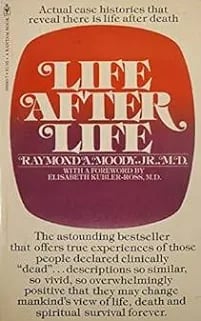
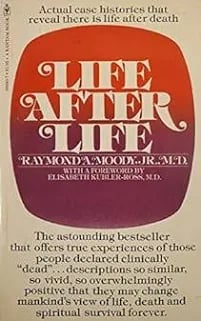
I read this book very early, before taking my faith seriously. This groundbreaking work was one of the first formal scientific studies into the phenomenon of Near-Death Experiences (NDEs). Dr. Moody interviewed over a hundred people who were pronounced clinically dead and later revived, discovering a startling consistency in their accounts. Despite their different backgrounds, many reported the same extraordinary details—feelings of peace, the "tunnel," and a review of their lives—suggesting a shared experience that transcends individual explanation.
While Life After Life is not written as a 'Christian' book, its findings offer a fascinating perspective that complements our understanding of the afterlife. By documenting these consistent, real-world experiences through a scientific lens, Moody provides a unique bridge between clinical observation and the spiritual truths we hold about what lies beyond.
Modern evolution focuses strictly on the physical development of life, but Moody’s research highlights the enduring spiritual side of our existence. These consistent accounts provide a profound reason to doubt the idea that we are merely biological accidents; instead, they offer a compelling glimpse into a purposeful afterlife where consciousness continues long after the body fails. This book was written in the 70's, but there have been other studies and books written since then that corroborate Dr Moody's work.
If you ever find yourself in a debate about evolution and the origin of life, here is a thought worth sharing: 'If we are nothing more than biological accidents, why do so many people—from vastly different cultures and backgrounds—report the exact same purposeful journey after their hearts have stopped?' It’s a point that science struggles to answer, and it opens the door to a much bigger conversation about our Creator.
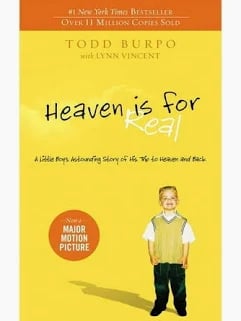
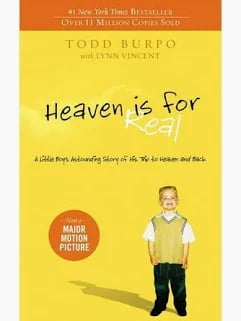
Heaven is for Real
While Dr. Raymond Moody provided the scientific framework for Near-Death Experiences, Heaven is for Real provides the heart. It tells the remarkable true story of four-year-old Colton Burpo, who, during emergency surgery, visited Heaven and returned with details he couldn't possibly have known—including meeting a sister who had miscarried before he was born. If Life After Life makes you wonder about the "tunnel," this book gives you a beautiful, scripturally-grounded glimpse of who is waiting for us at the end of it.
We often overcomplicate our faith, but this book reminds us to "receive the kingdom of God like a little child." Colton Burpo’s account of Heaven is strikingly simple yet profound. He speaks of the colors, the many people, and the overwhelming kindness of Jesus. For anyone who has ever lost a loved one or felt a bit cynical about the world, Colton’s story is a refreshing reminder that the promises of the Bible are not just metaphors—they are a reality waiting for us.
The book was turned into a film, too, of the same name. One part of the movie that always gets me is when Colton tells his mom that he met the sister who had miscarried before he was born. "What was her name?" his Mom asks. "She didn't have a name cause you didn't name her," Colton replied. There are lots of doubters about Colton's story. I'm not one of them. Several years later, another boy claimed to have had a similar experience, but later recanted. If you can believe it, his last name was "Malarkey." You couldn't make that up if you tried.